A superset is two exercises performed back to back with little or no rest, and yes, they work. Research shows supersets deliver comparable strength and muscle gains to traditional sets while cutting session time by roughly a third. The pairing rules are what separate a smart superset from a wasted one.
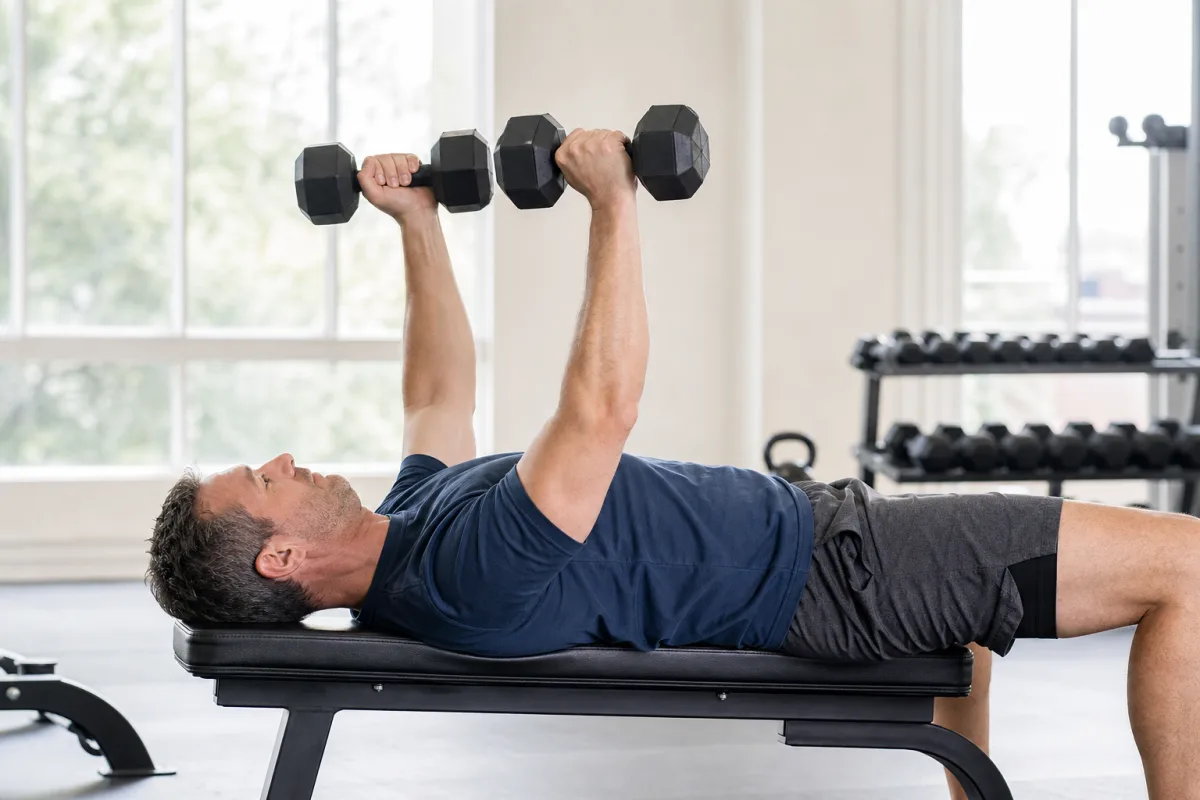
Almost every client who tells me they cannot train consistently is telling me a scheduling problem, not a motivation problem. Sixty minutes three times a week is a real ask for someone with a job and kids. When I cut that to forty without cutting the work, the consistency problem usually solves itself, and supersets are the main tool I use to do it.
How Does a Superset Actually Work?
You do exercise A, move immediately to exercise B, then rest once before repeating the pair. In a traditional session you would rest after A and again after B, which means two rest periods per round instead of one.
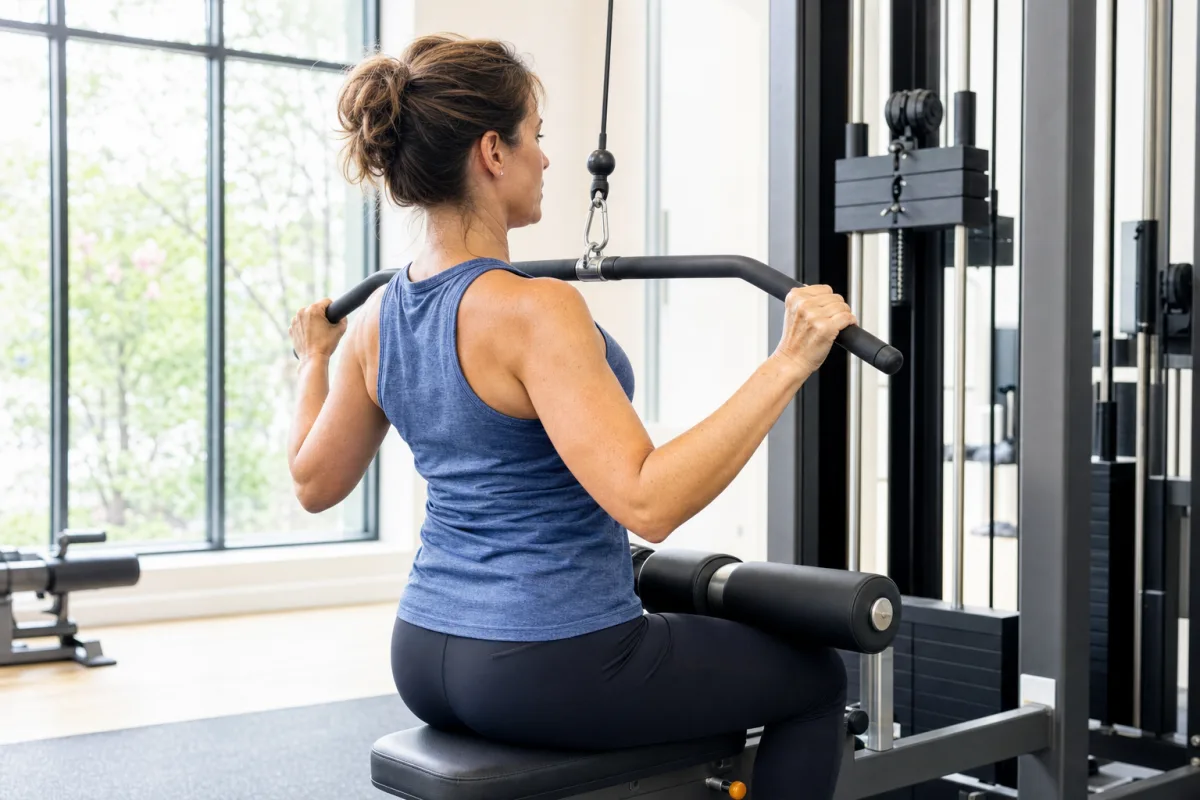
The mechanism is simple. While your chest is pressing, your back is resting. While your back is rowing, your chest is resting. You are not shortening recovery for either muscle group, you are just stacking the recoveries on top of each other instead of running them one after the other. That distinction is the entire reason this works, and it is why pairing choice determines whether you save time or lose strength. If you have never thought carefully about rest at all, start with how long to rest between sets.
The villain is the 90-minute workout. Somewhere along the line, gym culture decided session length was a proxy for commitment, and a whole generation of lifters learned that a serious workout takes an hour and a half. It does not. Most of that time is spent standing between sets, and treating it as sacred has cost more people their training habit than any bad program ever did.
Do Supersets Build Less Muscle Than Straight Sets?
This was the honest concern for years, and it has now been tested directly.
Burke and colleagues, working with Brad Schoenfeld's group at Lehman College, ran an eight-week randomized trial in 43 resistance-trained men and women. Both groups did the same six exercises twice weekly. One group used supersets, the other used traditional straight sets.
Changes in muscle thickness, strength, power, muscular endurance, and body composition were comparable between groups. The superset group finished sessions in 36 percent less time.
Zhang and colleagues published a systematic review and meta-analysis in Sports Medicine in 2025 pooling 19 studies and 313 participants.
Supersets cut training duration by roughly 37 percent while maintaining similar total volume load, and produced comparable chronic adaptations in maximal strength, strength endurance, and hypertrophy. They also produced higher perceived exertion and higher blood lactate, though perceived recovery afterward was similar. The sessions feel harder. They are not harder to recover from.
Two independent lines of evidence pointing the same direction is about as clean as this field gets. The time saving is real, the cost to results is not detectable, and the tradeoff is that the session feels more demanding while you are in it.
Which Exercises Should You Superset Together?
Pair opposing patterns. That is the rule, and everything else is a footnote to it.
| Pairing | Example | Verdict |
|---|---|---|
| Horizontal push and horizontal pull | DB bench press + cable row | Ideal |
| Vertical push and vertical pull | Overhead press + lat pulldown | Ideal |
| Quad and hamstring | Leg extension + seated leg curl | Ideal |
| Biceps and triceps | Cable curl + triceps pushdown | Excellent for arms |
| Upper body and core | Lat pulldown + Pallof press | Good filler pairing |
| Two exercises, same muscle | Bench press + chest fly | Costs reps on the second lift |
| Two heavy compounds | Back squat + deadlift | Avoid. Form degrades fast |
That last row is where people get hurt. Supersetting two maximal lower body lifts means your second movement gets loaded onto a fatigued trunk and a spiking heart rate, and technique is the first thing to go. Keep your heaviest compound lift as a standalone with full rest, then superset everything after it.
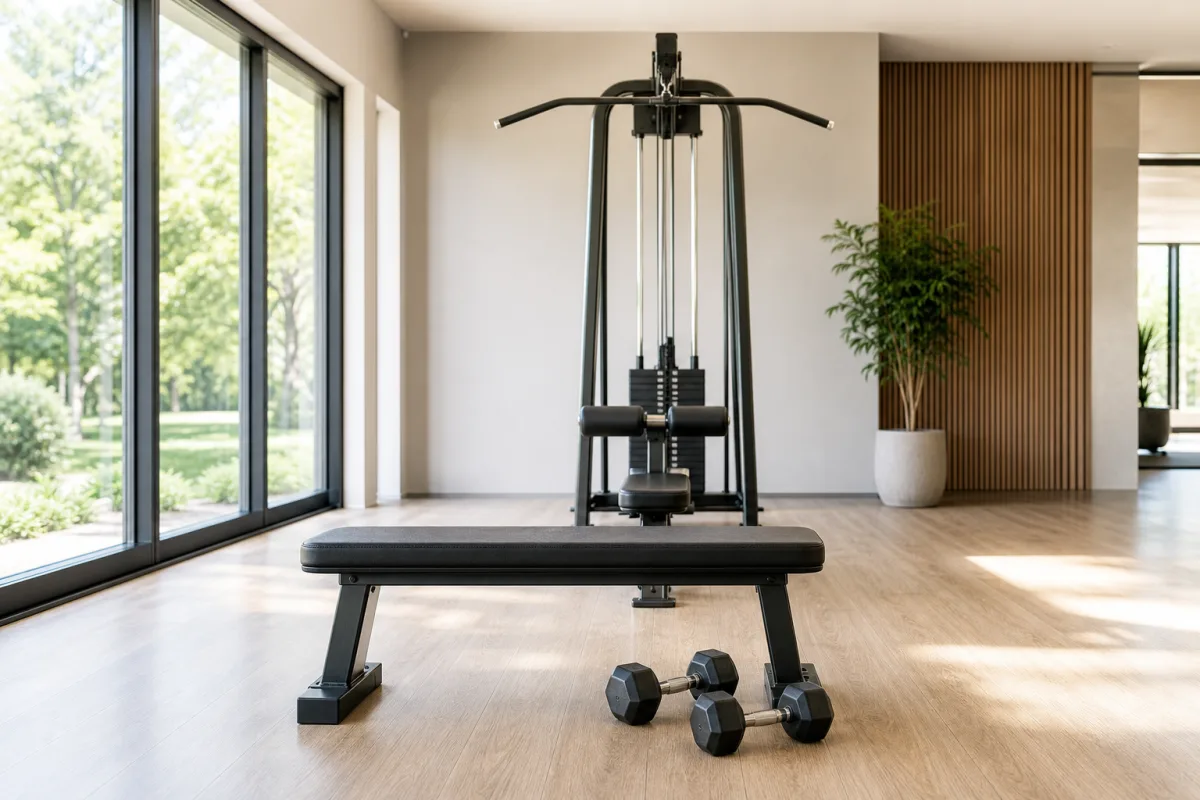
There is also a logistics rule nobody writes down. A superset only works if you can hold both stations, which in a busy commercial gym at 6 p.m. is a real constraint. Pair a dumbbell movement with a cable movement, or two movements that live in the same corner. Do not pair the squat rack with a machine on the other side of the floor unless you enjoy losing your equipment.
How Does CoachCMFit Program Supersets Across 12 Weeks?
Supersets are not the whole program. They are what I do to the accessory work after the important lift is finished.
CoachCMFit's Anchor + Accessory System
Each session opens with an anchor, a heavy compound lift that stays in place for three to four cycles and gets full rest of 90 to 120 seconds as a standalone. Accessories rotate every six sessions and get paired into supersets with 45 to 60 seconds between exercises. The anchor keeps the strength progression honest, and the supersets buy back the time.
That structure runs inside the standard CoachCMFit 12-week build: three four-week blocks, Foundation at 12 to 15 reps, Build at 8 to 12, Challenge at 6 to 10. Supersets appear starting in Block 2. Block 1 stays on straight sets deliberately, because someone learning a movement pattern should not be learning it while out of breath. Once the technique is grooved, the pairings come in, and the session drops from about 55 minutes to about 40.
Progression does not change because you superset. You still add weight when you earn it, and the rule for that is in progressive overload explained. Set and rep targets stay where they were, which is covered in how many sets and reps build muscle.
One caution I give every CoachCMFit client: if lower body depth or knee position falls apart during a paired set, that is usually not a fatigue problem. It is a mobility problem the fatigue exposed, and the fix is in how to improve ankle mobility.
- Keep your heaviest compound lift as a standalone with 90 to 120 seconds of rest.
- Pair everything after it by opposing pattern: push with pull, quad with hamstring.
- Rest 45 to 60 seconds between the two exercises in a pair, and 90 seconds after the pair.
- Choose pairings whose stations are within a few steps of each other.
- Keep your sets, reps, and loads the same as before. Only the rest structure changes.
If your workouts currently run long enough that you skip them when the week gets tight, this is the highest-leverage change available to you, and it costs nothing. The full time-management picture is in workout routines for busy people, and if you are still unsure how long a session should actually run, how long should workouts be settles it.