No. Protein supplies the raw material muscle is made from, but mechanical loading is the signal that tells your body to use it that way. Without resistance training, most of the extra protein you eat is burned for energy or cleared, and a 2026 opinion paper in The Journal of Physiology argues that raising protein intake without a parallel rise in physical activity is unlikely to improve muscle health at all.
Protein has become the most oversold nutrient in the grocery store. It is in the water now. And the promise underneath every one of those labels is that the protein itself is doing something.
The question I get before anyone has trained a single week
The most common first question I get from someone starting out is some version of "what should I be eating." Almost never "what should I be lifting." Protein powder, meal timing, whether they should be doing shakes. All of it before a single structured training session has happened.
I understand why. Food feels controllable. You can buy a tub of protein on a Sunday night and feel like you have started. Walking into a gym and putting a bar on your back is a different kind of ask.
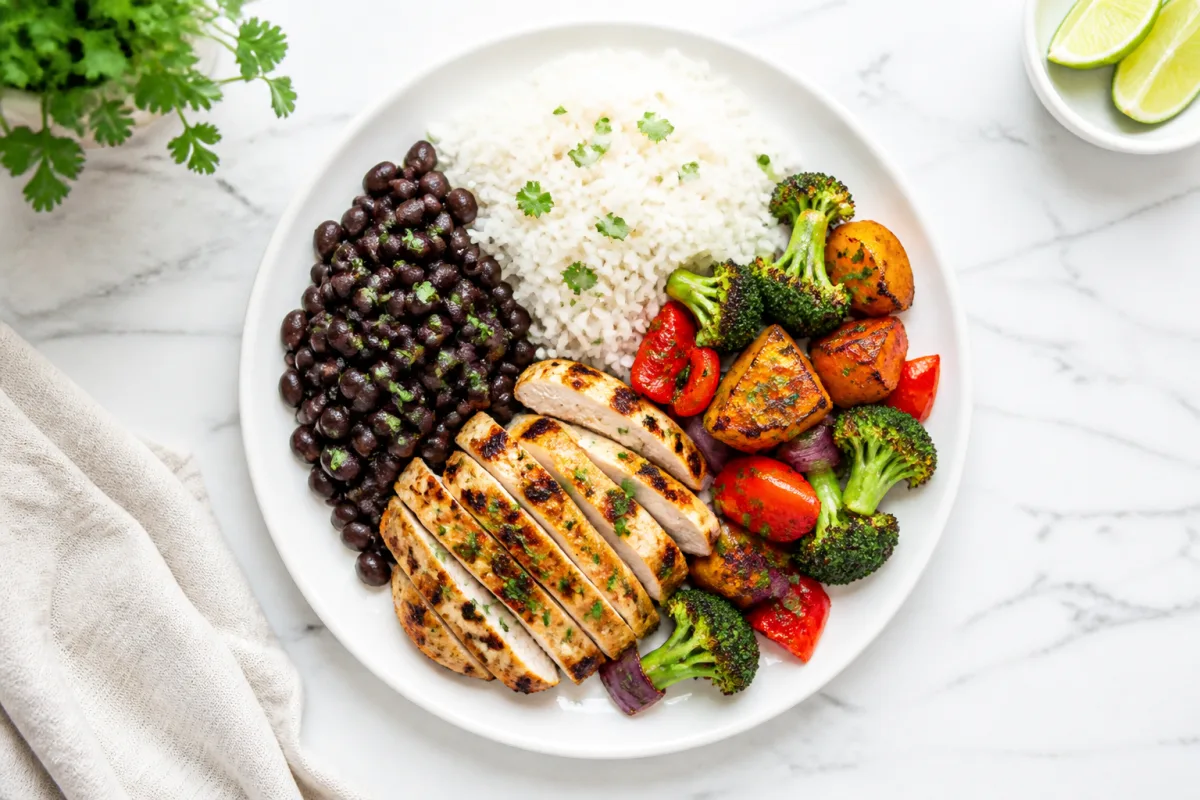
But it is the wrong order, and after 13 years of coaching I have stopped pretending otherwise. The nutrition system I built for CoachCMFit starts at Level 0 with one instruction: build your main meals around a protein source, a fiber-rich plant, and an energy food. That is the entire starting assignment. No tracking, no calculating, no separate fitness food. It works because it raises protein intake through familiar meals rather than through a spreadsheet, and because it can survive a Tuesday when work runs long.
What it does not do is build muscle by itself. Nothing on a plate does. The plate is the material. The training is the instruction.
Why does the protein-first message keep spreading?
Here is the villain, and it is a subtle one because it is partly true. Protein genuinely is important. Most people genuinely do undereat it relative to what supports training. So the correction was needed.
Then the correction became a product category. Protein cereal, protein coffee, protein chips. And somewhere in that expansion the message quietly mutated from "protein supports the muscle you are building" into "protein builds muscle," which is a different claim entirely and is not true.

The mutation matters because it sells the easy half of a two-part equation. Buying protein is frictionless. Loading a muscle progressively for three months is not. When the marketing implies the first can substitute for the second, people spend money, wait, see nothing change, and conclude their body is broken.
The Dietary Guidelines for Americans 2025-2030, published in January 2026, leaned further into higher protein while, by the authors' reading, easing off physical activity as a companion message. That is the specific split the Copenhagen researchers took issue with. Not the protein number. The decoupling.
What does the research actually show?
Højfeldt, Morgan, and Soendenbroe, working out of the Institute of Sports Medicine Copenhagen, University of Copenhagen, and Manchester Metropolitan University, published an opinion piece in The Journal of Physiology in 2026 titled "Increasing protein intake without increased physical activity is unlikely to improve muscle health." Their central argument is that protein requirements are context dependent, and that raising intake in isolation at the population level is unlikely to produce meaningful muscle benefit without a concurrent rise in physical activity.
Their own earlier controlled feeding work is the sharpest piece of it. Twelve older men were habituated for 21 days to either the RDA of 0.8 grams per kilogram per day or a higher intake above 1.5 grams per kilogram per day. On the high protein diet, fasted whole-body protein synthesis rose, but muscle protein breakdown rose alongside it, producing a lower net whole-body protein balance. A greater fraction of circulating amino acids also passed straight from artery to vein without being taken up by the muscle. (Højfeldt et al., 2020, 2021)
Earlier work found that when people are habituated to higher protein intakes, circulating amino acid levels rise but the muscle protein synthesis response to a protein-rich meal is not further amplified, while amino acid oxidation keeps climbing. In other words, the surplus gets burned, not built. (Walrand et al., 2008)
Protein requirements do rise with training. Older adults need larger protein doses than younger adults to produce a similar muscle protein synthesis response, and that requirement is further elevated in people performing resistance exercise training. (Moore et al., 2015; Nunes et al., 2022)
That last line is the whole article in one sentence. Training raises your protein requirement. Protein does not lower your training requirement.
Two honest qualifications. The Journal of Physiology piece is an opinion and review article rather than a new trial, so it is an expert argument over existing evidence, not fresh data. And the 21-day feeding study is 12 older men, which is small. Neither of those undoes the direction of the finding, but you should know what you are being handed.
The consistent picture across all of it: below a certain intake, protein limits you. Above it, adding more without adding load does not help, and the Copenhagen data suggest it can tilt net balance the wrong way. There is a range, not a ladder.
How much protein do you actually need?
The RDA sits at roughly 0.8 grams per kilogram of bodyweight per day. It is worth knowing what that number is for: it was set to prevent deficiency in 97.5 percent of the population, not to define an optimum for anyone. Most American adults already meet or exceed it.
The 2025-2030 guidelines point at roughly 1.2 to 1.6 grams per kilogram. For someone training two or three times a week, that range is well supported and I use it. For someone training zero times a week, the evidence that pushing from 1.0 to 1.6 changes their muscle mass is thin.
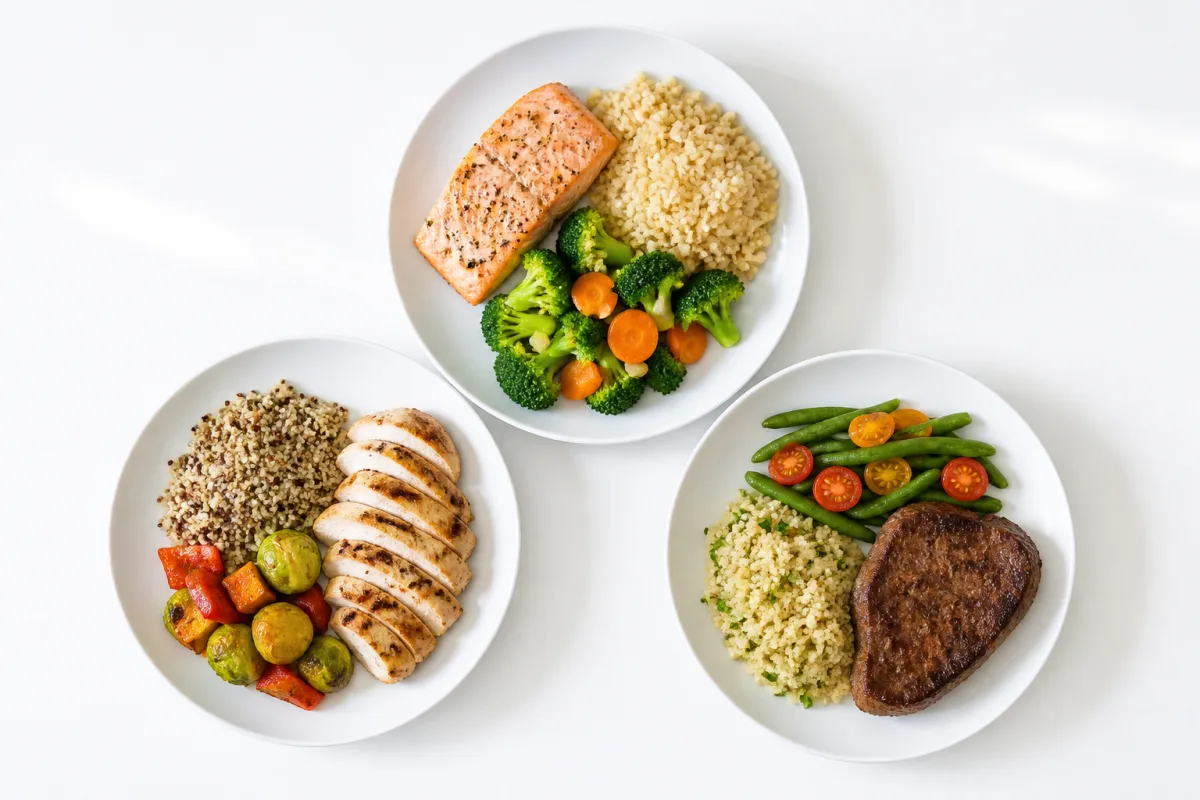
The practical translation: if you are training, aim for a palm-sized protein portion at each of three or four meals and stop doing math. If you are not training yet, your protein intake is not the thing standing between you and muscle.
Distribution matters more than most people think, because the muscle protein synthesis response to a single dose plateaus rather than scaling forever. Three moderate protein meals outperform one enormous dinner. Though the paper is candid that the independent long-term effect of distribution on actual muscle mass is still not fully established.
That also settles the supplement question for most people. Powder is convenience, not a separate mechanism, and it earns its place only when appetite or schedule is genuinely in the way.
One more thing worth saying because it comes up constantly. Plant protein works. Research shows plant-based sources stimulate muscle protein synthesis comparably to animal sources when the total essential amino acid requirement is met, which usually means a slightly larger portion or a mix of sources. The animal-versus-plant argument is far less decisive than it was ten years ago.
The order that actually works

CoachCMFit runs training and nutrition as two separate ladders, because people are rarely at the same level in both. Someone can be three months into consistent lifting and still eating like they are not, and someone else can have immaculate meals and no training stimulus at all. The second person is the one this article is for.
The sequence I use:
- Start the training signal. Two sessions a week, every major muscle group, a squat, a hinge, a push, a pull. This is the step that makes everything downstream matter. Ninety to 120 minutes a week is the target.
- Anchor your meals before you count anything. Protein, a fiber-rich plant, an energy food. Three times a day. Most people gain 30 to 40 grams of daily protein from this alone without tracking a thing.
- Spread it out. Three or four moderate protein meals instead of one large one. Breakfast is where most people are lightest.
- Progress the load. The weight goes up over weeks. This is what raises your protein requirement into the range everyone is arguing about, and it is the only thing on this list that actually builds tissue.
- Add precision only if the trend stalls. Tracking is a diagnostic tool for when progress stops, not the price of entry. Most people never need it.
If you take one thing from this: protein is not a treatment. It is a supply line to a construction project that has to already be underway. Feeding the project is worth doing well. Feeding a project that does not exist is just groceries.