Ice baths reduce soreness, and they also blunt muscle growth when you take them right after lifting. You are trading long-term adaptation for short-term comfort. Whether that trade is smart depends entirely on what tomorrow requires of you.
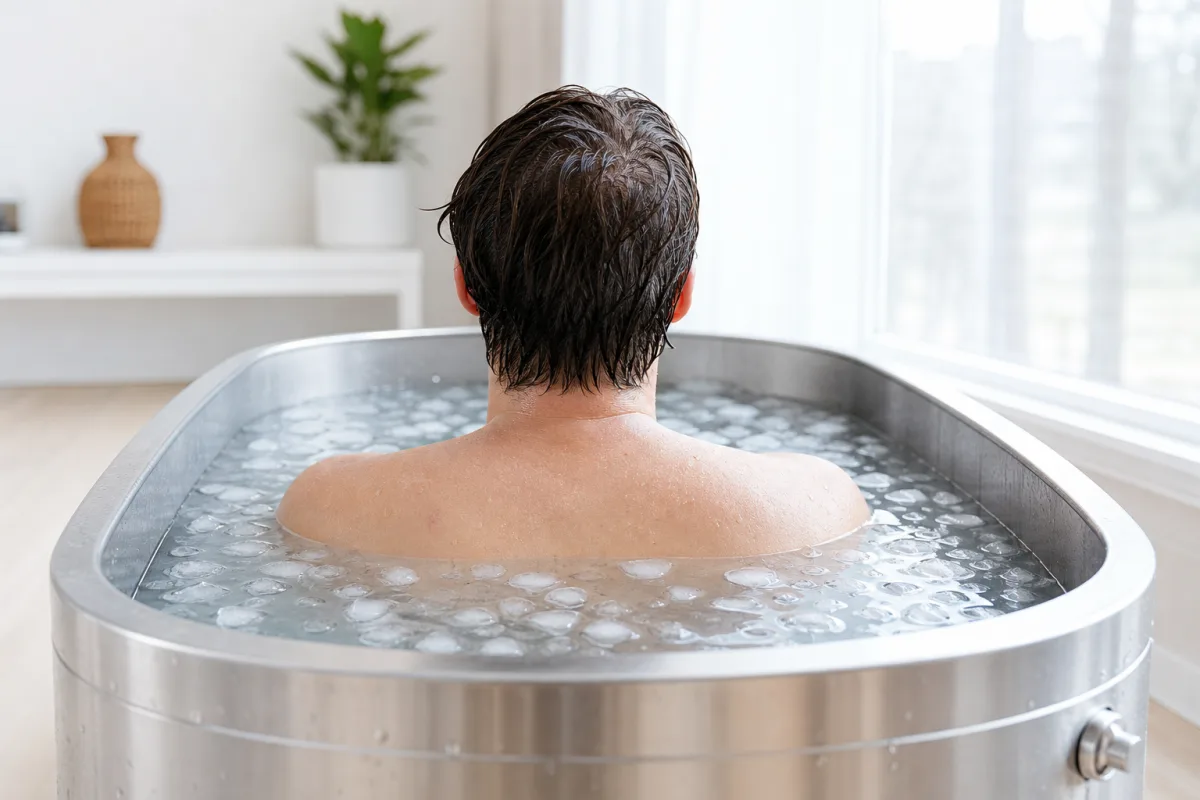
Cold plunges went from a niche athlete thing to a personality in about three years, and along the way the marketing quietly dropped the part where the research is genuinely mixed. I have clients who bought a tub before they had a consistent bedtime, which tells you everything about how recovery gets sold.
Here is what the evidence actually supports, and where the cold belongs in a training week.
Do Ice Baths Reduce Muscle Soreness?
Yes. This part is real and reasonably well established.
A Cochrane systematic review on cold water immersion for muscle soreness found evidence that it reduces delayed onset muscle soreness compared with passive rest. If your only question is whether your legs will hurt less two days after a brutal session, cold water is a legitimate answer.
The catch is what soreness actually means. It is a poor proxy for damage and a poor proxy for progress, and chasing less of it is not the same as recovering better. I get into that distinction in why you are always sore after working out.
What Does the Research Say About Ice Baths and Muscle Growth?
This is where the story turns, and the strongest study on it is not close.
Roberts and colleagues, working out of the University of Queensland, published a 12-week trial in The Journal of Physiology in 2015. Twenty-one physically active men did the same strength program. Half used cold water immersion after every session, half did active recovery on a bike.
The active recovery group gained more strength and more muscle mass. The cold water group showed reduced satellite cell activity and blunted signaling through the kinases that regulate hypertrophy, measured directly from muscle biopsies. The mechanism and the outcome pointed the same way.
A 2019 trial in the Journal of Applied Physiology looked at the same question with whole-body resistance training and found that cold water immersion attenuated anabolic signaling and muscle fiber hypertrophy, though strength gain itself was not significantly reduced in that study.
That nuance is worth keeping. The size effect shows up more consistently than the strength effect. If you care about how much muscle you carry, the cold is a real cost. If you only care about how much you can lift, the cost is smaller and less certain.
The villain is the recovery-as-identity industry. Cold plunges get sold as pure upside, a thing you add to a good routine to make it better. But inflammation after training is not a malfunction. It is the signal that tells your body to rebuild. Blunting that signal on purpose, every session, works against the exact adaptation you showed up for.
When Is an Ice Bath Actually Worth It?
When performing again soon matters more than adapting. That is the whole rule, and it is narrower than most people want it to be.
| Situation | Ice Bath? | Why |
|---|---|---|
| Right after a normal lifting session | No | Blunts the adaptation you just paid for |
| Tournament or event, competing again tomorrow | Yes | Performance tomorrow beats adaptation this month |
| Two-a-day training | Yes, between sessions | Restores readiness for session two |
| Physical job the morning after training | Yes | Function matters more that day |
| Deload week | Fine | Adaptation is not the goal that week |
| Training in extreme heat | Yes | Cooling is the point, not the inflammation |
| Because it feels good and you like it | Your call | Just do it 4+ hours after lifting |
That last row matters. If cold plunging is genuinely part of what makes you feel good and keeps you consistent, I am not going to talk you out of it. A habit that keeps you training beats an optimization that makes you miserable. Move it away from your lifting sessions and take the small remaining cost.
How Does CoachCMFit Handle Cold and Recovery Across 12 Weeks?
Cold is not part of the default program. It is an exception with a timestamp.
Every CoachCMFit program runs three four-week blocks. Block 1 is Foundation at 12 to 15 reps, Block 2 is Build at 8 to 12, Block 3 is Challenge at 6 to 10. Blocks 1 through 3 are all adaptation phases, which means cold water within four hours of a session is off the table. The window opens during the deload between 12-week cycles, when the goal is feeling fresh rather than adding tissue.
CoachCMFit's 4-Hour Cold Rule
No cold water immersion within 4 hours of a strength session during an adaptation block. If you want a plunge on a lifting day, take it in the evening or the following morning. On non-lifting days it is unrestricted.
What Should You Do Instead After Lifting?
The unglamorous list beats the tub by a wide margin, and it is free.
- Sleep 7 to 9 hours. Nothing else in recovery comes close. Growth hormone release, muscle protein synthesis, and appetite regulation all run through it, and how to sleep better for muscle growth is the highest-leverage thing on this page.
- Eat 0.8 to 1 gram of protein per pound of bodyweight. Spread across the day, not stacked in one meal.
- Walk on off days. Twenty to thirty minutes of easy movement moves blood through sore tissue without adding fatigue. That is exactly what the active recovery group in the Queensland study was doing while they out-gained the cold group.
- Deload on schedule. Planned lighter weeks prevent the accumulated fatigue that makes people reach for extreme recovery tools in the first place. The protocol is in the deload week guide.
- Manage your training volume. Most people who need heroic recovery are simply doing too much, and how to recover faster from workouts covers the full hierarchy.

- Move any cold plunge to at least 4 hours after lifting, or to a non-lifting day.
- Keep the dose modest. Ten to fifteen degrees Celsius for 10 to 15 minutes is the researched range.
- Fix sleep and protein before you spend a dollar on any recovery equipment.
- Use active recovery, meaning an easy walk or spin, on the days after hard sessions.
- Reserve the ice for the days when performing tomorrow genuinely outranks adapting.
None of this makes cold water useless. It makes it a specific tool with a specific job, which is how every good recovery method works. What it is not is a free upgrade you bolt onto a training program to get more out of it, and treating soreness as the enemy is a mistake I see constantly. If sore is your main complaint, how to deal with muscle soreness handles it without costing you muscle.
Heat is the other half of this conversation, and whether the sauna helps recovery covers what the trials found and why it may be the safer default for lifters.