The best exercises to lose weight at home are squats, push-ups, rows, hip hinges, and daily walking, organized into three strength sessions per week with a progression plan. Strength movements protect the muscle that keeps your metabolism up while you lose fat, and walking adds calorie burn with almost zero recovery cost. The deficit itself still comes mostly from food.
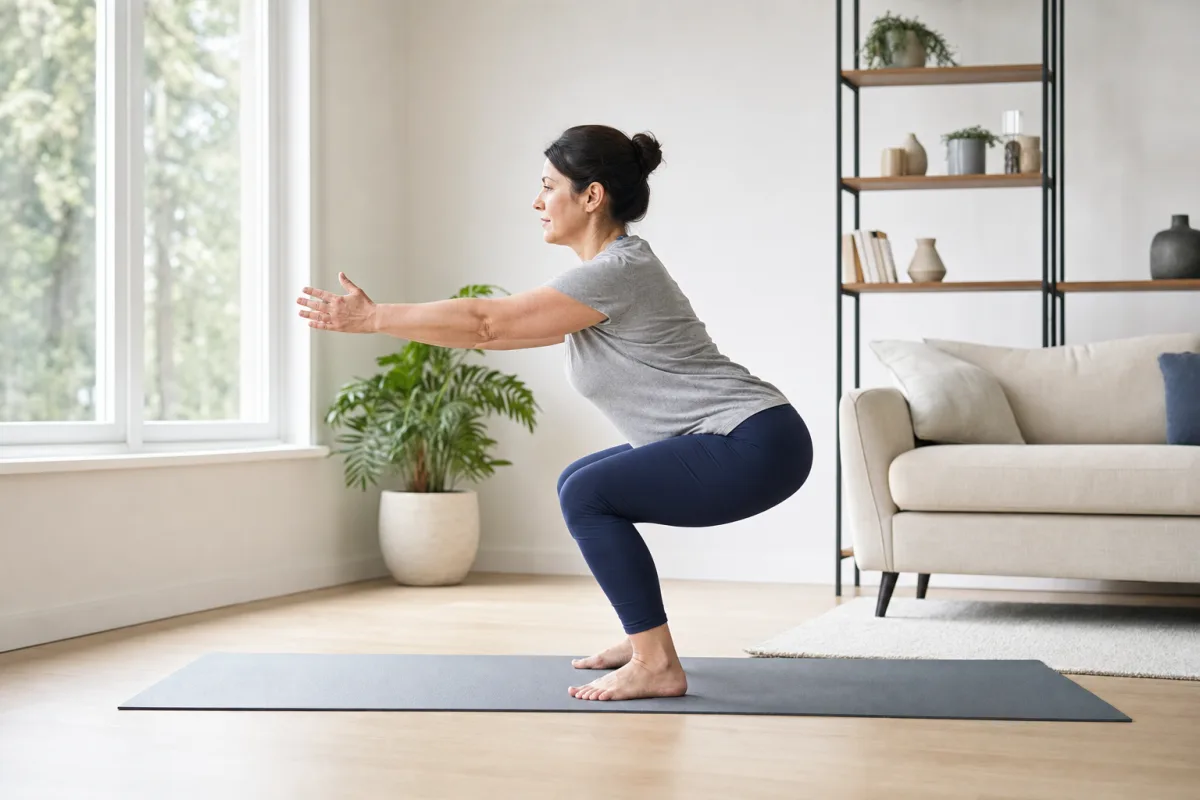
I've coached clients through home-only fat loss phases plenty of times in 13 years, and the ones who succeed are never the ones doing random YouTube circuits until they're drenched. They're the ones running a boring, structured plan built on a handful of movements that they progress week after week. The sweat is not the product. The progression is the product.
Why Do Most Home Workouts Fail for Weight Loss?
The villain here is the "burn 500 calories in 30 minutes" workout video. Those circuits are designed to feel brutal, because feeling brutal is what gets clicks. But they have no progression from week to week, they're too chaotic to track, and they beat up your joints with high-rep jumping while doing very little to keep your muscle.
That last part is the real problem. When you lose weight without strength training, a meaningful chunk of what you lose is lean tissue, and lean tissue is what holds your metabolism up. You end the diet smaller, softer, and burning fewer calories at rest than a person who lifted through it. That is the setup for losing weight and gaining it right back.
The location was never the issue. Your body does not know whether resistance comes from a barbell, a dumbbell, or your own bodyweight held at a harder angle. It knows tension, effort, and progression. Give it those three things in your living room and it adapts the same way it would in a gym.
What Does the Research Say About Exercise and Fat Loss?
Duke University's STRRIDE AT/RT trial, published in the Journal of Applied Physiology in 2012, randomized 234 overweight adults into aerobic training, resistance training, or both. Aerobic training reduced fat mass and body mass more per hour invested, while resistance training was what increased lean mass. The combined group got the best overall body composition change.
A 2021 meta-analysis from the University of New South Wales, published in Sports Medicine, pooled 58 randomized trials and found resistance training alone, with no dieting attached, reduced body fat percentage, fat mass, and visceral fat in healthy adults. Lifting is not just for muscle. It burns fat on its own, slowly and quietly.
The practical takeaway: cardio empties the tank faster, lifting builds a bigger engine, and the combination wins. That is exactly how a home plan should be built.
None of this replaces the deficit. Exercise multiplies the result of eating right, but it cannot outrun a food problem, and knowing how many calories you need to lose weight comes before any exercise selection. Once that number is set, the exercises below decide what your body looks like when the scale drops.
What Are the Best Exercises to Lose Weight at Home?
Five patterns cover everything. Every exercise you'd ever need at home is a version of one of these, made easier or harder to match your level.
| Pattern | Start Here | Progress To |
|---|---|---|
| Squat | Chair-assisted squat, 12-15 reps | Goblet squat with a dumbbell or loaded backpack |
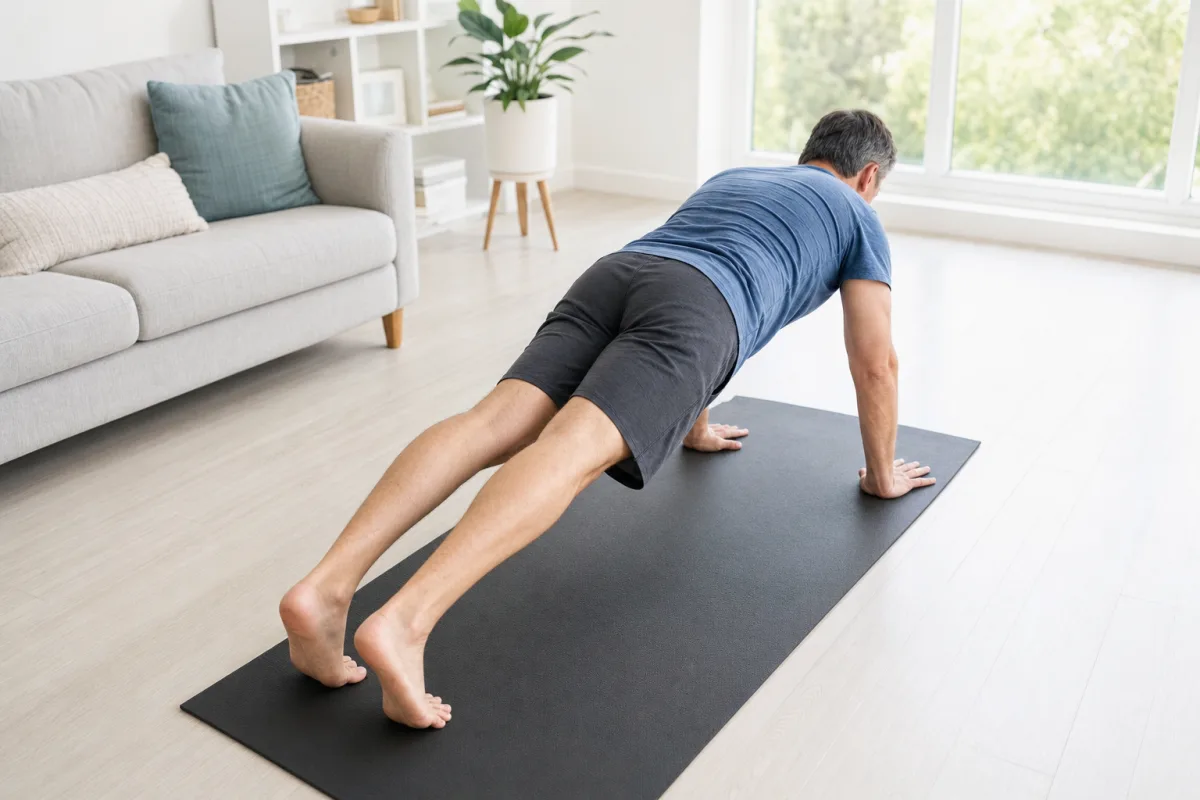
| Push | Incline push-up on a counter | Floor push-up, then feet-elevated push-up |
| Pull | Bent-over row with bands or backpack | Single-arm dumbbell row, heavier each block |
| Hinge | Glute bridge, 12-15 reps | Single-leg hip thrust, dumbbell Romanian deadlift |
| Walk | 7,000 steps per day | 8-10k steps, or incline intervals on a treadmill |
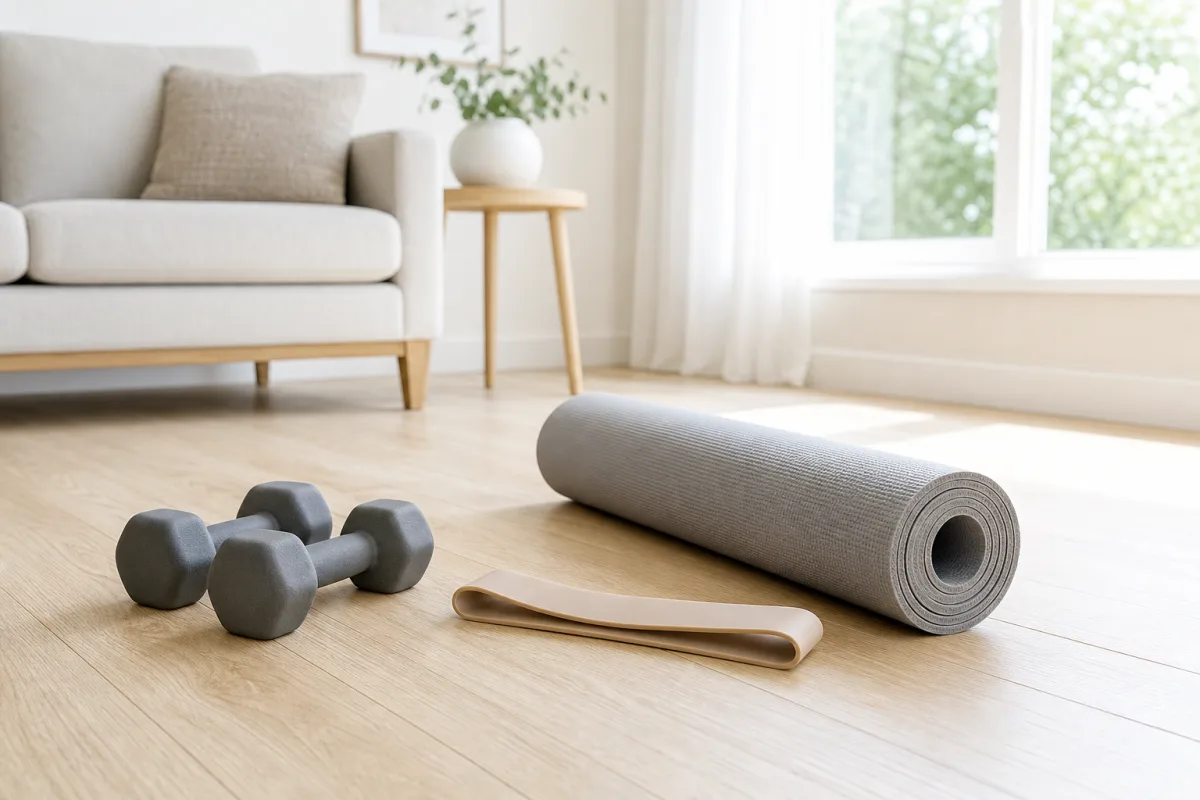
The pull pattern is where home setups usually fall short, and it matters too much to skip. A backpack loaded with books works for rows on week one, but a set of resistance bands or one adjustable dumbbell solves it properly for years. If you have a single kettlebell instead, even better, because learning how to do a kettlebell swing adds a conditioning tool that trains the hinge pattern and spikes your heart rate in the same movement.
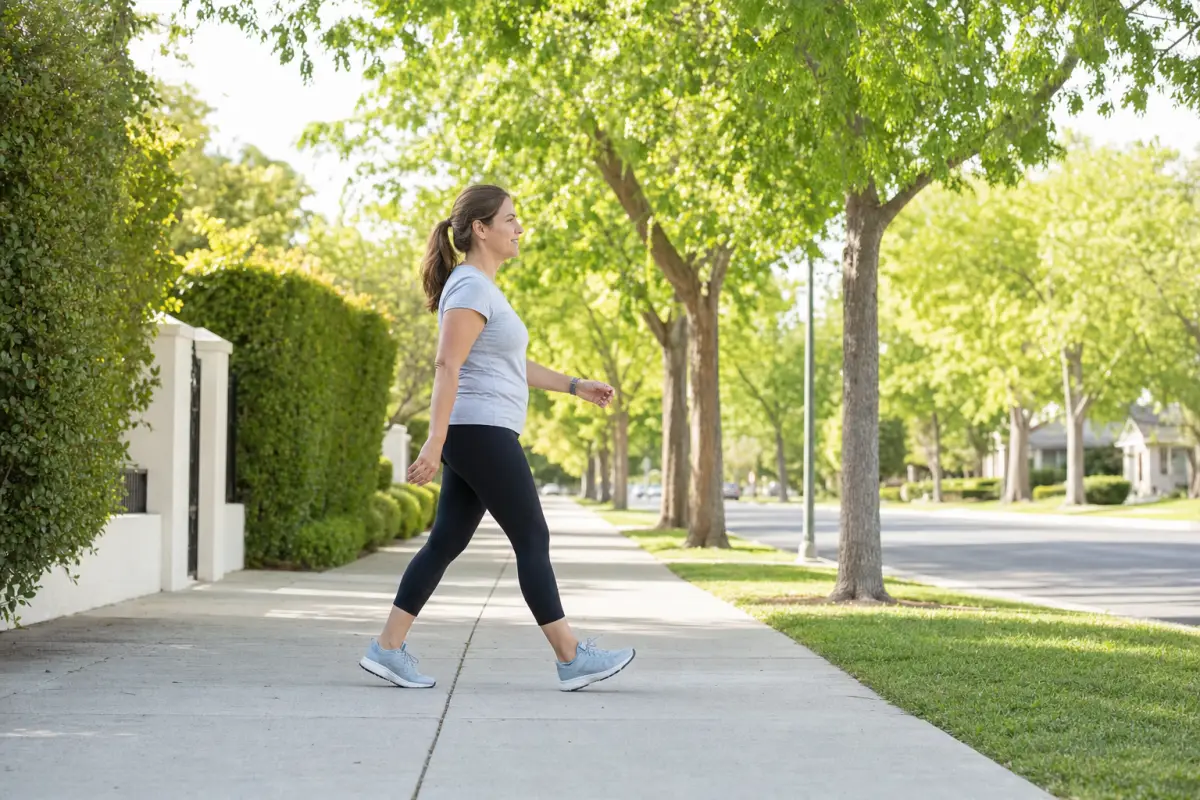
Walking deserves more respect than it gets. It burns meaningful calories, requires zero recovery, lowers stress, and is the easiest activity to do every single day without negotiating with yourself. The research case for walking for weight loss is stronger than the case for almost any trendy conditioning format, precisely because people actually keep doing it.
How Do You Turn Exercises Into a Fat Loss Plan?
Exercises are ingredients. A plan is a recipe. Here is the structure CoachCMFit uses for home fat loss clients, and it runs on the same 12-week periodization system every gym client gets: three 4-week blocks called Foundation, Build, and Challenge.
The CoachCMFit Home Fat Loss Circuit
Three days per week, full body, about 35 minutes. Warm up, then run this as a circuit: squat pattern, push pattern, pull pattern, hinge pattern, plank. Complete 3 rounds, resting 60-90 seconds between exercises. In Block 1 (weeks 1-4) work at 12-15 reps learning clean form. Block 2 (weeks 5-8) moves to 8-12 reps with added load. Block 3 (weeks 9-12) pushes 6-10 reps with your heaviest loads, and the last week finishes each pattern with a set taken close to failure. Walking happens daily, on top, every block.
Progression is what separates this from a workout video, and it follows CoachCMFit's 6/6 Overload Rule: complete all prescribed reps in 6 sessions at a given difficulty, and you've earned the upgrade, whether that's more load in the backpack, a harder push-up angle, or a heavier dumbbell. Miss a rep, stay and try again. The rule removes guessing, and clients who follow it typically add resistance every two to three weeks for months without a single random decision. That steady climb is what makes lifting burn fat long after the session ends.
How Fast Should the Scale Move?
Slower than the ads promised, faster than you fear. With the circuit running three days per week, daily steps, and a moderate calorie deficit, a realistic pace is 0.5-1% of bodyweight per week. For a 200 lb person that's 1-2 lbs weekly, with the first week or two dropping faster from water. I broke down the honest math in how much weight you can lose in a month, and the short version is that the people who accept a realistic pace keep the result, while the people who chase a dramatic pace repeat the diet every year.
In 13 years of coaching at CoachCMFit, the home clients who paired three structured strength days with a daily walk have consistently matched the results of gym clients on the same nutrition plan. The gym adds convenience and equipment variety. It does not add magic.
- Pick your five exercises today, one per pattern, at the difficulty you can do for 12-15 clean reps.
- Schedule three 35-minute sessions this week, and treat them like appointments.
- Walk every day. Start at 7,000 steps and build toward 8-10k.
- Track every session: exercise, difficulty, reps. Apply the 6/6 rule to earn each upgrade.
- Set your calorie target and protein at 0.8-1g per pound of bodyweight, because the deficit does the losing.
- Reassess at the end of each 4-week block and move to the next rep range.
You do not need a gym membership to lose weight. You need five patterns, three days, a daily walk, and the discipline to progress on a schedule instead of chasing soreness. Everything else is decoration.