If you hate working out, stop trying to like the workout you hate and change the variables instead: lower the intensity, shorten the session, move it out of the setting you dread, and pick movements you do not resent. Enjoyment is not a personality trait you either have or lack. It is largely a matching problem, and it can be engineered.
My whole coaching philosophy comes down to one line I wrote out long before I ever put it on a website: meet them where they are at. There is no perfect workout, and the best program in the world is worthless if the person holding it will not do it. That belief did not come from a textbook. It came from watching motivated adults fail at programs that were technically excellent and completely wrong for their life.
People who hate exercise almost always got handed the wrong version of it, decided the problem was them, and stopped. That sequence is so common it is basically the default experience.
Why Does Hating It Matter So Much?
Because enjoyment is not a bonus. It is a predictor of whether you are still training in six months, and the research on this is more direct than most people expect.
A study published in Frontiers in Psychology examined enjoyment as a predictor of exercise habit, intention to continue exercising, and exercise frequency. Enjoyment predicted all three, and the relationship was moderated by how well the prescribed intensity matched the individual's own intensity traits.
Related research on intensity preference and tolerance found that these traits are positively related to enjoyment both during and after exercise, leading the authors to conclude that exercise prescription should be adjusted to an individual's intensity preferences in order to improve continuous adherence.
Read the second finding carefully, because it inverts the usual advice. The standard message is that you should push harder and build mental toughness. What the evidence says is that pushing past someone's tolerance point predictably reduces enjoyment, which predictably reduces how often they train, which is the only variable that actually determines results.
The turning point where effort stops feeling tolerable varies substantially between people. Yours might be genuinely lower than your friend's, and that is a physiological and psychological difference rather than a moral one. Training above it every session is not discipline. It is a design error.
Which Part Do You Actually Hate?
This is the question nobody asks, and it is where the fix starts. "I hate working out" is four separate complaints wearing one coat, and people quit all four when only one was the problem.
| What You Hate | What It Sounds Like | The Change |
|---|---|---|
| The intensity | "I feel awful the whole time" | Train at conversational effort. Stop three reps short. Nothing to failure. |
| The setting | "I feel watched and out of place" | Train at home, outdoors, or at the quietest hour the gym has. |
| The duration | "I do not have an hour for this" | Cut it to 20 minutes. Two exercises done consistently beats six done never. |
| The movements | "I hate running and I hate burpees" | Do not do them. There is no exercise you are required to like. |
| The uncertainty | "I do not know what I am doing" | Follow a written plan so no decisions happen at the gym. |
That last row is the one people underestimate. A lot of what reads as hatred is actually anxiety about looking incompetent in public, and it disappears when the session is written down in advance. I covered that specific experience in gym anxiety for beginners, because it is one of the most common reasons a paid membership sits unused for a year.
What Does a Version You Can Tolerate Look Like?
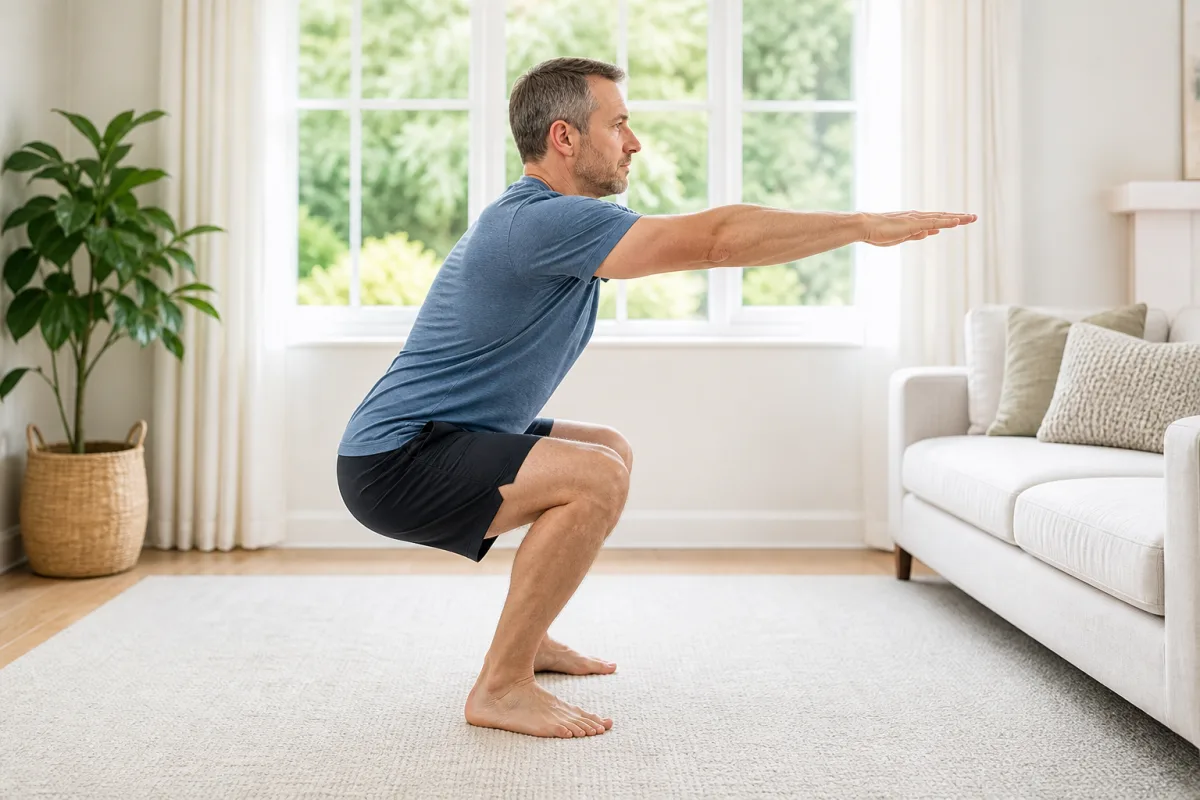
Small, short, and boring on purpose. When someone tells me they do not know where to start or that they have failed at this before, I do not hand them a gym program. I start them at CoachCMFit's Level 0, which runs 14 days, six short workouts, done at home with no equipment purchase required.
Level 0 Home Edition
No jumping, no training to failure, nothing to buy, and no gym required. Six sessions over 14 days, each one short enough that the excuse of not having time does not apply. There is a graduation gate at the end that moves someone into Level 1 only when they have actually completed it. I built it this way because the barrier to the first session was killing more people's progress than any programming variable ever did. Getting the first two weeks done is worth more than optimizing anything that comes after.
If home training is your lane, a no-equipment home workout covers what the sessions actually contain. And if even that feels like too much right now, walking counts more than people give it credit for. I made that case in whether walking is enough exercise, and the honest answer is that it is a real starting point even though it is not a complete one.
Does It Ever Get Better?

Frequently, yes, and there is data on the timeline. A study of previously sedentary adults found that enjoyment of interval training increased across the first six weeks of a program. The sessions that felt worst were the earliest ones, which is precisely when most people conclude they are not built for this and stop.
Two things change over those weeks. You get more competent, so the same session costs less effort and less mental bandwidth. And you start collecting evidence about yourself, which is a quieter reward than a transformation photo but a more durable one. Carrying groceries in one trip. Getting off the floor without using your hands. Those wins compound in a way that motivation never does.
- Pick the single variable you hate most from the table above and change only that one.
- Set the session at 20 minutes and hold the effort where you could still talk through it.
- Do it three times in week one. Not five. Three is enough to establish a pattern and small enough to survive a bad day.
- Write down what you did each time, even one line, so week two has evidence to build on.
- Judge the whole experiment at six weeks, not at day four.
You do not have to love it. In 13 years of coaching I have worked with plenty of people who never became gym people and got strong anyway. Tolerable and repeated beats enjoyable and abandoned, every single time. The goal is a life where you are capable, not a life where you are enthusiastic about barbells.
The people who last are rarely the ones with the most motivation. They are the ones who built something small enough to survive a bad week and honest enough that they never had to pretend. If you want the mechanics of making it automatic, building a workout habit and staying consistent pick up exactly where this leaves off.