Most adults need somewhere between 20 and 40 grams of protein powder a day, and past roughly 30 to 35 grams the extra scoops stop adding muscle. Powder exists to close the gap between what you eat and what you need. It is not a separate driver of growth sitting alongside your food.
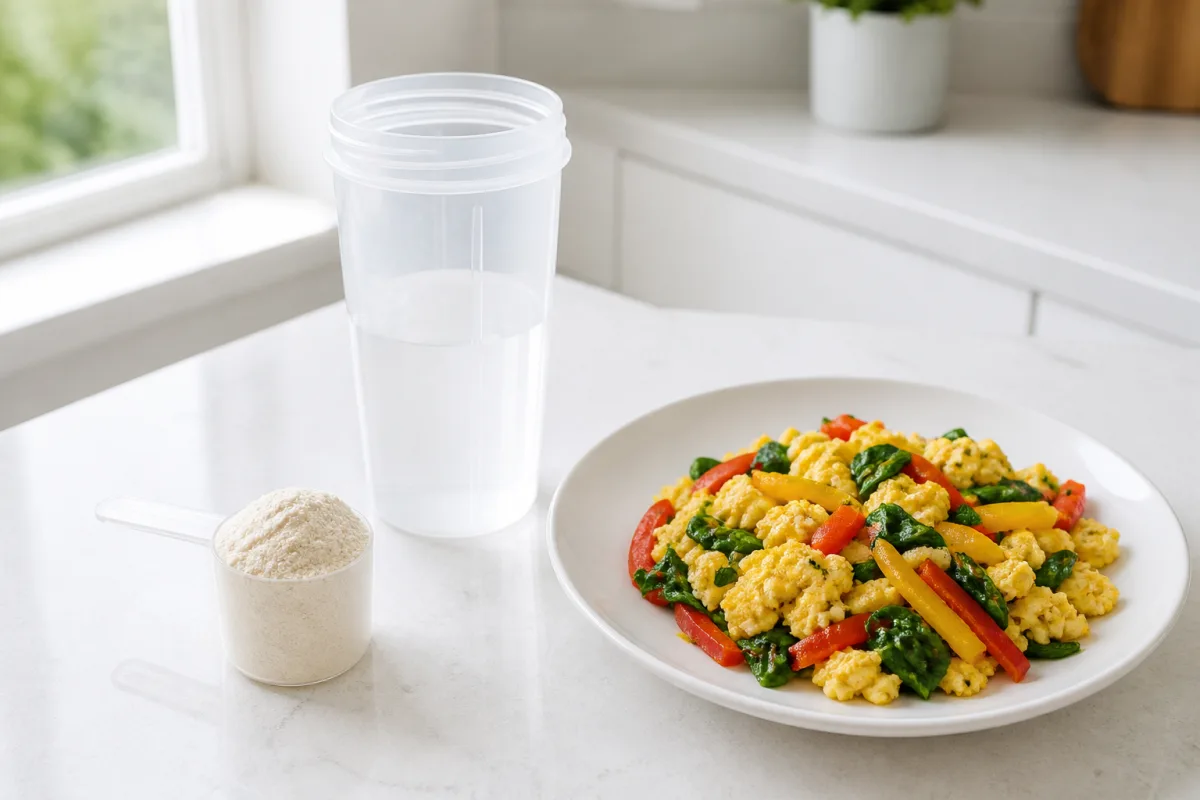
Nearly every person who books a nutrition consult with me already owns protein powder. The tub is usually the first thing they bought and close to the last thing they needed, because the same person will tell me two minutes later that they skip breakfast, eat a handful of almonds at their desk, and then build the entire day's eating around dinner. Adding a shake to that pattern is like patching one tire on a car with three flats.
A meta-analysis published this month put real numbers on where powder helps and where it quits, so this is a good moment to sort out the dosing question properly.
What Does the Newest Research Say About Protein Powder Dosing?
On August 6, 2026, a research team published a Bayesian network meta-analysis in Frontiers in Nutrition examining how protein supplement type, dose, and population interact with resistance training. They pooled 36 randomized controlled trials covering 1,552 participants across 89 trial arms, which makes it one of the more granular looks at this question we have.
Whey ranked first for lean body mass gains, adding 1.24 kg over placebo (95% credible interval 0.61 to 1.87 kg), followed by milk protein at 1.18 kg and casein at 0.92 kg. The dose-response curve for whey plateaued at 30 to 35 grams per day, and every additional 10 grams per day corresponded to just 0.24 kg of extra lean mass.
In adults 65 and older, whey's advantage narrowed while casein's ranking improved, and the exploratory dose-response curve shifted to a plateau closer to 35 to 40 grams per day. Source: Li, Qin, Wang, and Zhang, Frontiers in Nutrition, Volume 13, August 6, 2026.
Read that plateau number again, because it is the practical takeaway. Thirty to thirty-five grams is one generous scoop for most brands. The second scoop is not doing what the label implies, and the third one is expensive urine.
One caveat matters and the authors flagged it themselves: 72 percent of the trials recruited only male participants. That is a real limitation in the literature rather than a flaw in this particular paper, and it means the dose-response curve for women rests on thinner evidence than the headline number suggests.
Why Does More Powder Stop Working?
Because your body responds to your total daily protein, not to the container it arrived in. Researchers at McMaster University ran a systematic review and meta-regression of 49 studies covering 1,863 participants, published in the British Journal of Sports Medicine in 2018. They found that protein supplementation stopped producing further gains in fat-free mass once total intake passed roughly 1.62 grams per kilogram of bodyweight per day. Beyond that line, more protein simply became more calories.
A separate dose-response meta-analysis in Sports Medicine Open landed in similar territory, suggesting about 1.5 grams per kilogram per day as the useful amount for maintaining and building strength alongside training. Two independent research groups, two similar ceilings. That is about as much agreement as nutrition science ever hands you.
So the villain here is not protein powder. The villain is the supplement industry's framing, where more scoops equal more muscle and the tub is treated as the intervention. It is a convenient story because powder is the part they sell. Nobody makes a margin on you eating more chicken. If you want the longer version of that argument, I covered it in whether protein powder is actually necessary.
How Much Protein Powder Should You Actually Take?
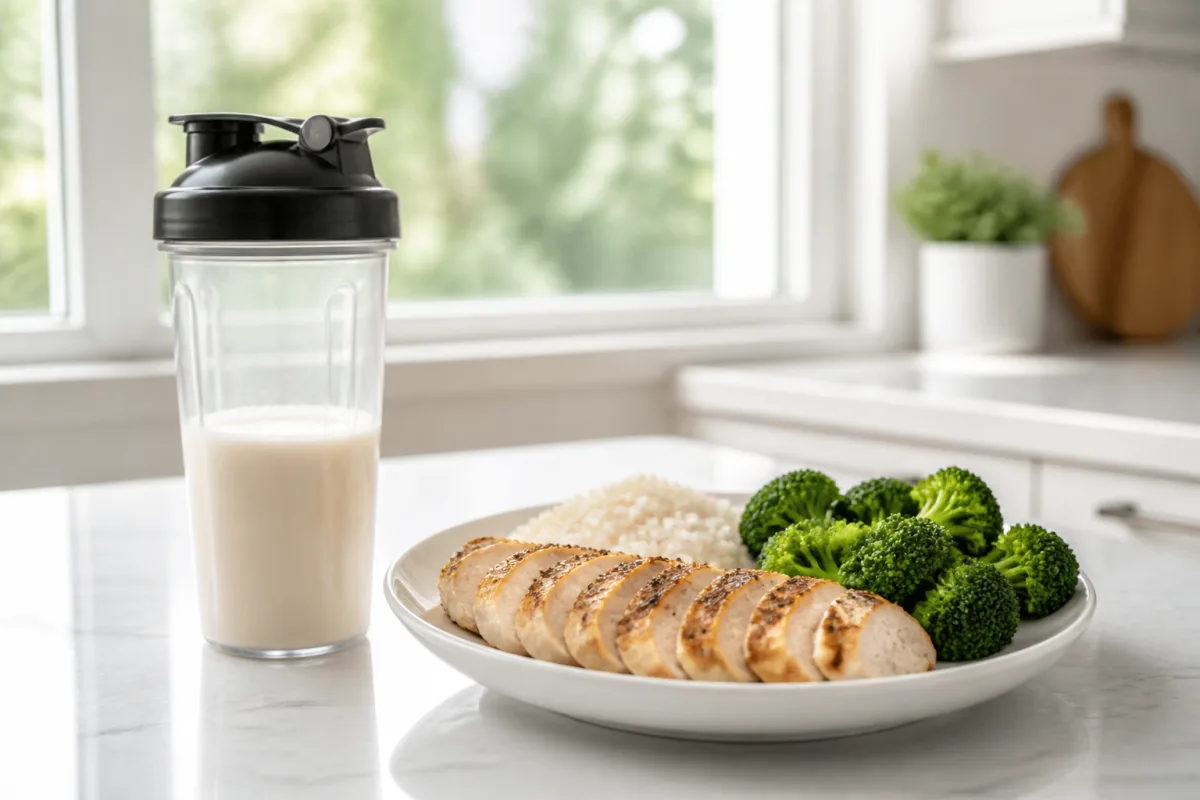
Work backward from your total, not forward from the tub. Set a daily protein target, add up what your normal meals already provide, and use powder for the difference. Most people discover the gap is one scoop wide.
| Your Situation | Daily Powder | Why |
|---|---|---|
| You eat protein at every meal | 0 to 1 scoop | You are probably already near your target. Powder is optional convenience. |
| You skip or rush breakfast | 1 scoop | The shake replaces the meal you were never going to cook anyway. |
| You train hard and eat light | 1 to 2 scoops | Two scoops sits at the top of the useful range, not the middle of it. |
| You eat plant-based | 1 to 2 scoops | Plant sources are less protein-dense per calorie, so the gap is genuinely wider. |
| You are in a fat loss phase | 1 scoop | Protein needs stay high while calories drop, and a shake is cheap in calories. |
Splitting it across the day is fine but not required. The absorption panic is overblown, and I unpacked the actual numbers in how much protein your body can absorb in one meal. Whether you pick whey, casein, or a plant blend matters less than whether you drink it consistently, though the whey versus plant protein comparison has a few real differences worth knowing.
Where Does Powder Fit in the CoachCMFit Nutrition System?
Late, and deliberately so. CoachCMFit's nutrition development system runs on its own ladder from Level 0 through Level 6, separate from the training ladder, because someone can be an advanced lifter and a complete beginner at feeding themselves. Those are different skills with different starting points.
Structure Before Restriction
Nutrition Level 0 teaches one thing: build an anchor meal from a protein, a fiber-rich plant, and an energy food. No counting, no scale, no supplements. Precision gets earned at Level 4 and beyond, once the pattern already survives a bad week. Adding powder to a person who has no anchor meal solves a problem they do not have yet.
I built the ladder that way after watching the same failure repeat for years. A person adds tracking, powder, and a meal plan in the same week, holds it for eleven days, hits a work deadline, and drops all three at once. The order matters more than the tools. Add structure before restriction, reduce decisions before adding precision, and keep the food they actually like in their life. If tracking is where you are headed eventually, counting macros as a beginner is a reasonable next rung, just not the first one.
The people at CoachCMFit who get the most out of a shake are the ones using it for a specific, named obstacle. They have a 6 a.m. client call and cannot cook. They train at lunch and get 30 minutes. That is a real problem and powder is a real fix. Buying a tub because the internet says protein is important is not the same thing.
How Do You Make This Work in a Normal Week?

- Set your target at roughly 1.6 grams of protein per kilogram of bodyweight, which is about 0.7 grams per pound.
- Write down what you eat for three ordinary days, not three good days, and total the protein.
- Cover the gap with powder, capping supplemental protein at about 30 to 35 grams daily.
- Attach the shake to the meal you reliably skip so it removes friction instead of adding a chore.
The honest summary: one scoop a day handles the job for most people. If you are consistently hitting protein through food, the tub is optional. If you want the food-first version of this, start with how to get enough protein and use powder as the backup plan rather than the plan.
Protein still deserves the attention it gets. It is the one macronutrient where most people are genuinely under target, and it matters even more during a fat loss phase, which is why protein intake during fat loss is worth its own read. Just spend your effort where the returns actually live, which is the four meals you eat every day, not the two scoops you are considering adding to them.